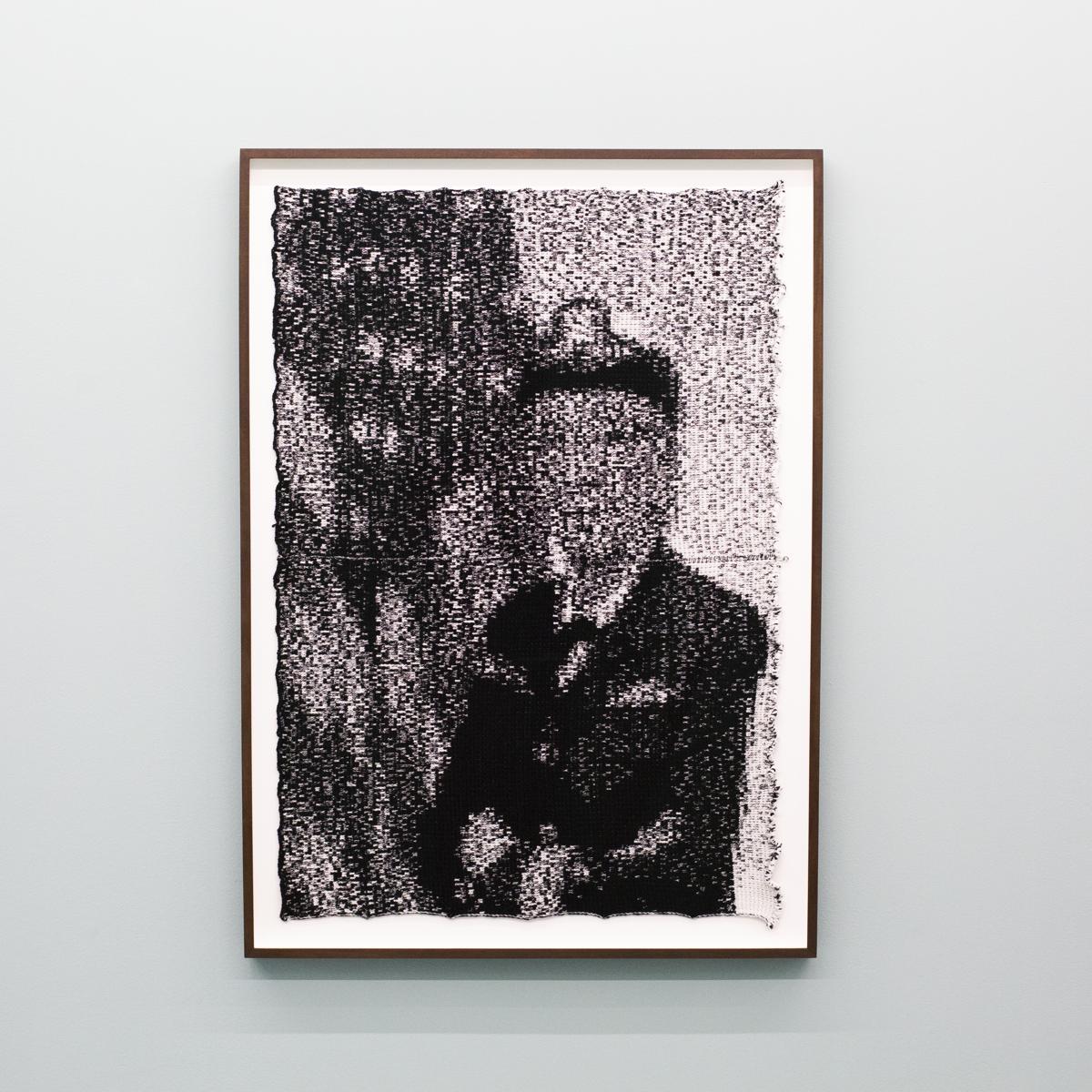
Exhibition at Lichtekooi
Knitted DNA and other stories about the first computer bug.
Many thanks to Ilse Van Roy and
Annelies Clerix for all the help in production
Pictures by Thor Salden
Those bugs are living among us Following mankind, they are everywhere. Small and hidden, almost
invisible. If one could say that they are parasitising our textiles, it could then be argued that
they only do so to acknowledge and appreciate its quality by feeding their larvae with it. Anyway,
if we compare it to other problems, the annoyance they cause is quite mild, and personally I always
feel touched when I see one. I believe our histories are bound together.
I used to work in a carpet shop. A house made out of fine wool, established in Antwerp for more
than a not-long-enough-to-get-rid-of-them century. Despite all our efforts, we would keep finding
some of them, or traces of their passage, hidden somewhere between the knots of a rug that escaped
our attention. The fight that our species wages against theirs is ongoing, and not epic at all. They
don’t seem to mind it that much and prove to be incredibly resilient against our efforts, sticking
with us for centuries. Because of our knowledge in making fabric, moths live among us.
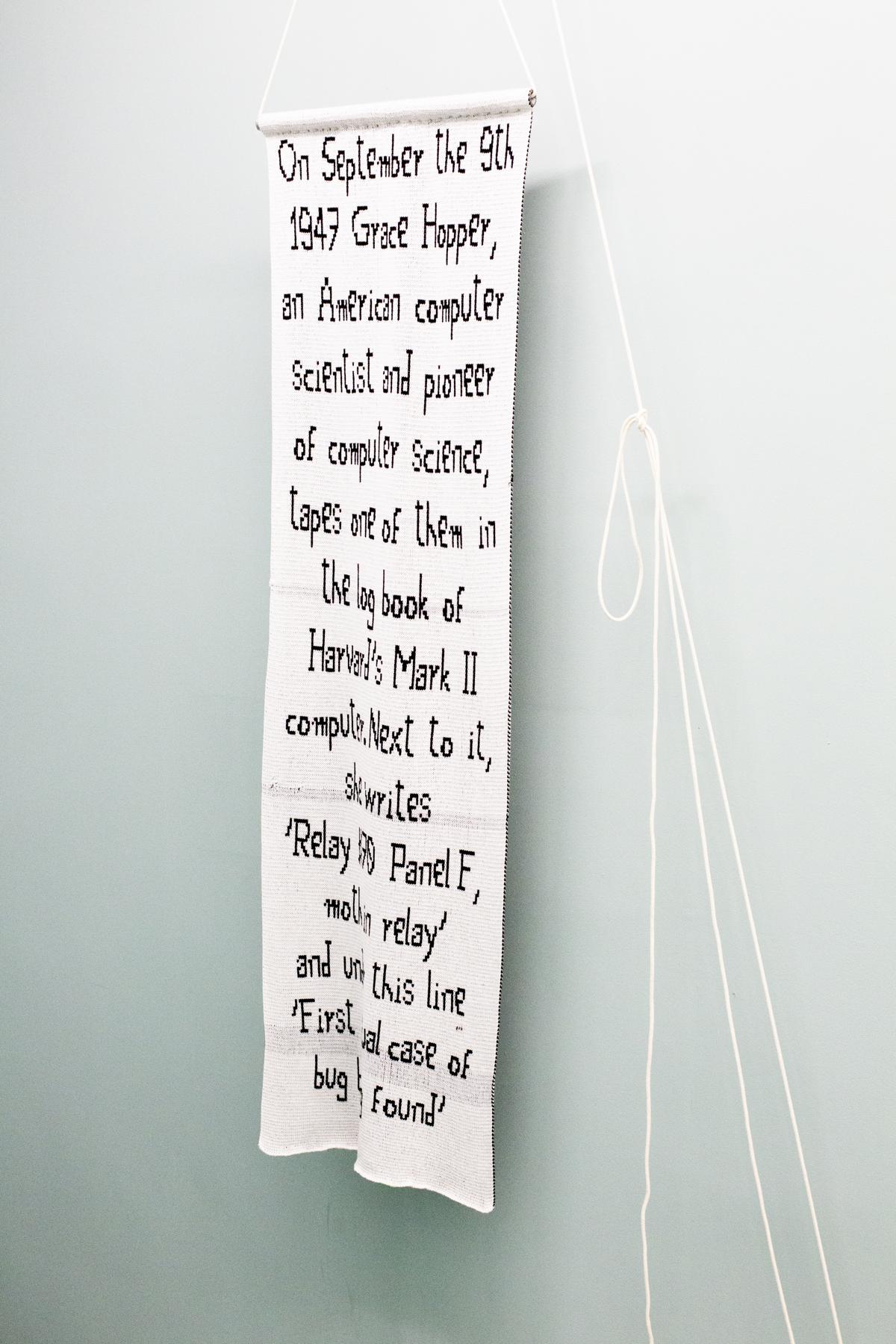
On September 9th 1947 in Harvard University, Grace Hopper, an American computer scientist and
pioneer of computer science, taped one of them in the log book of Harvard's Mark II computer. Next
to it, she writes : "Pannel # 70: moth in relay" and under this line: "First actual case of bug
being found". This logbook page is now conserved at the Smithsonian Institution's National Museum of
American History. It was the first computer bug who will soon enter the lexicon of programmers. An
actual bug, and the reason why, thanks to both this bug and this human, we now use that word to
describe this other form of (most of the time) mild digital annoyances.
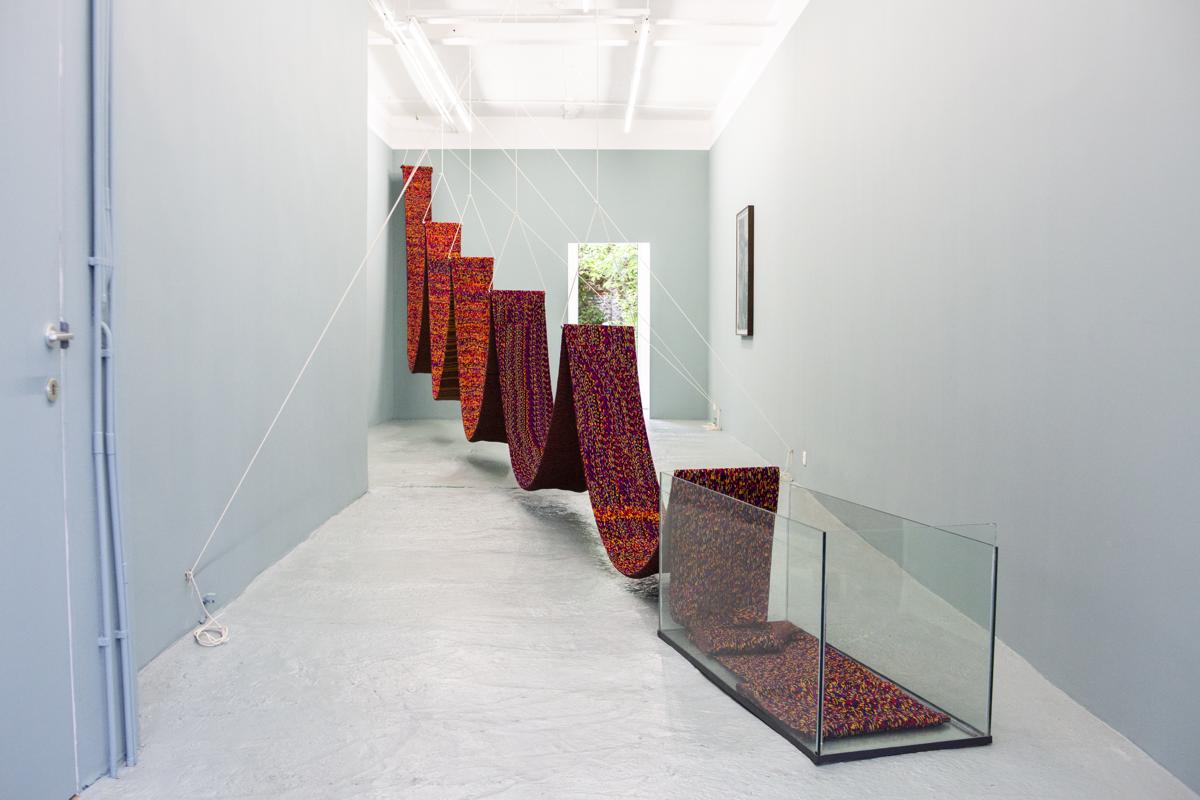
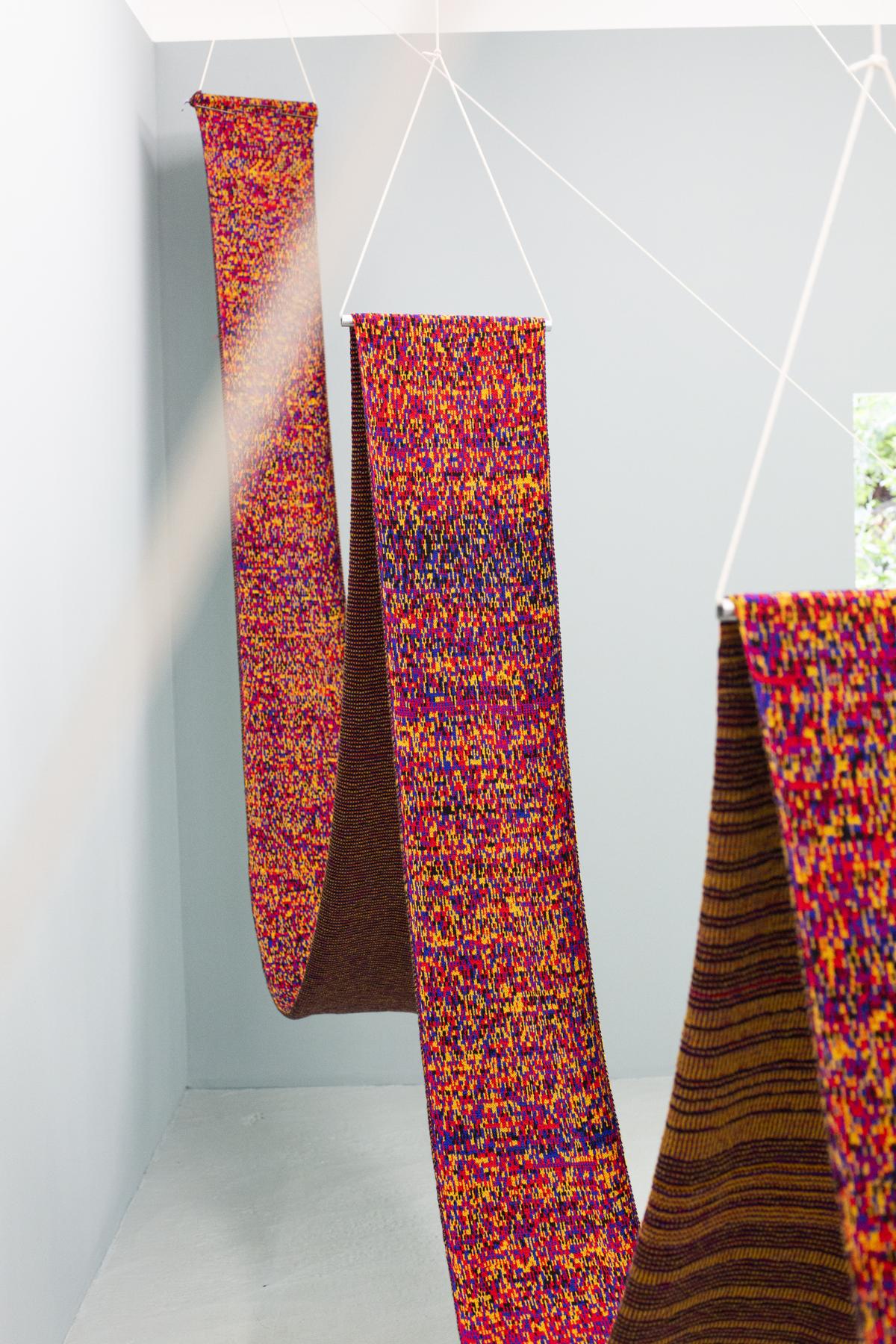
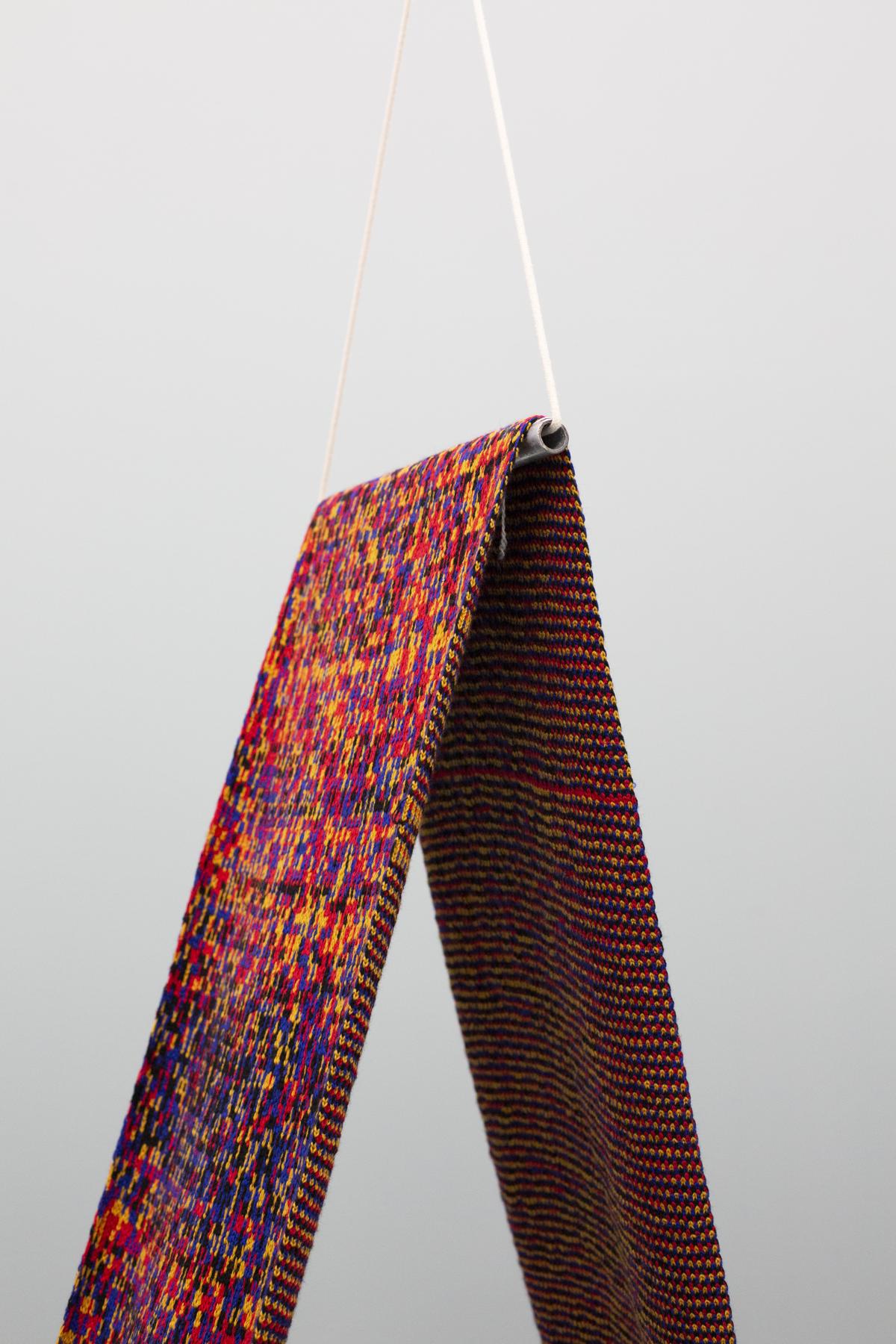
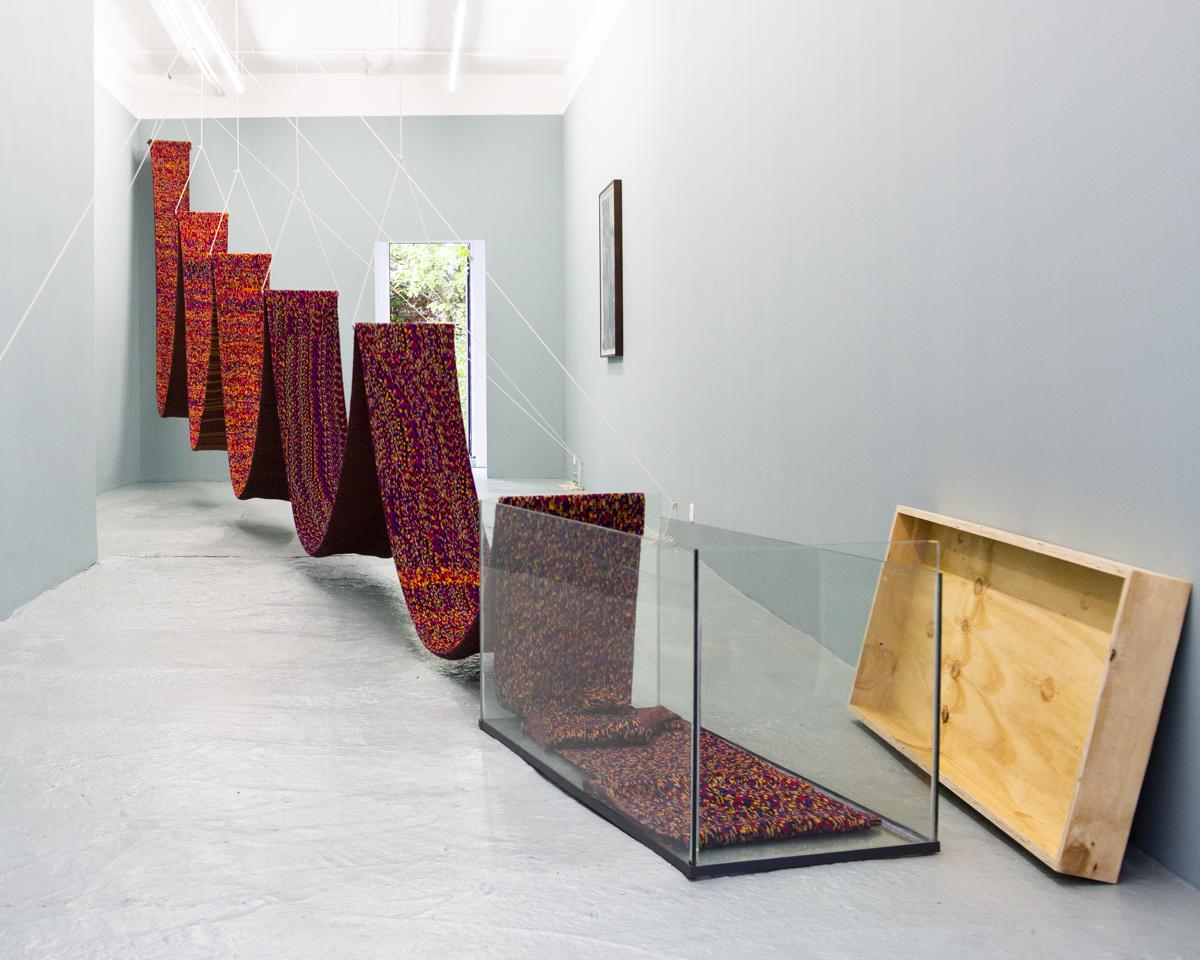
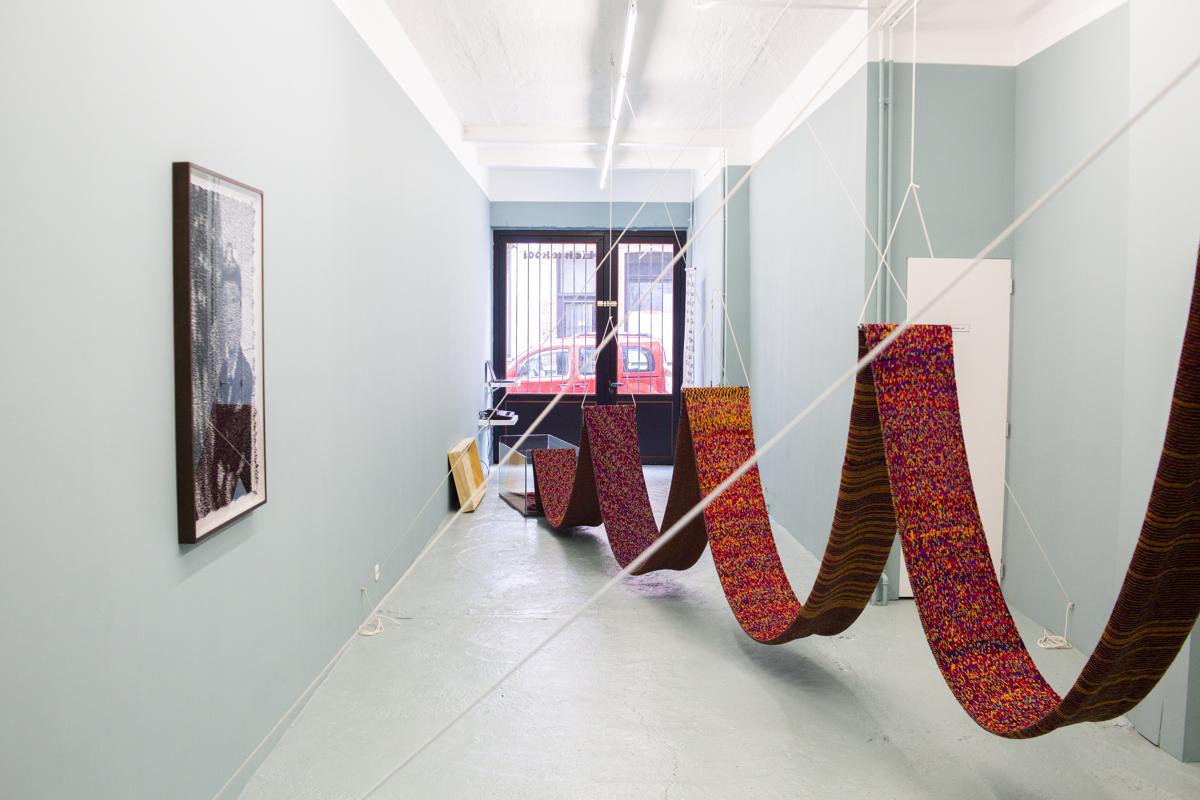
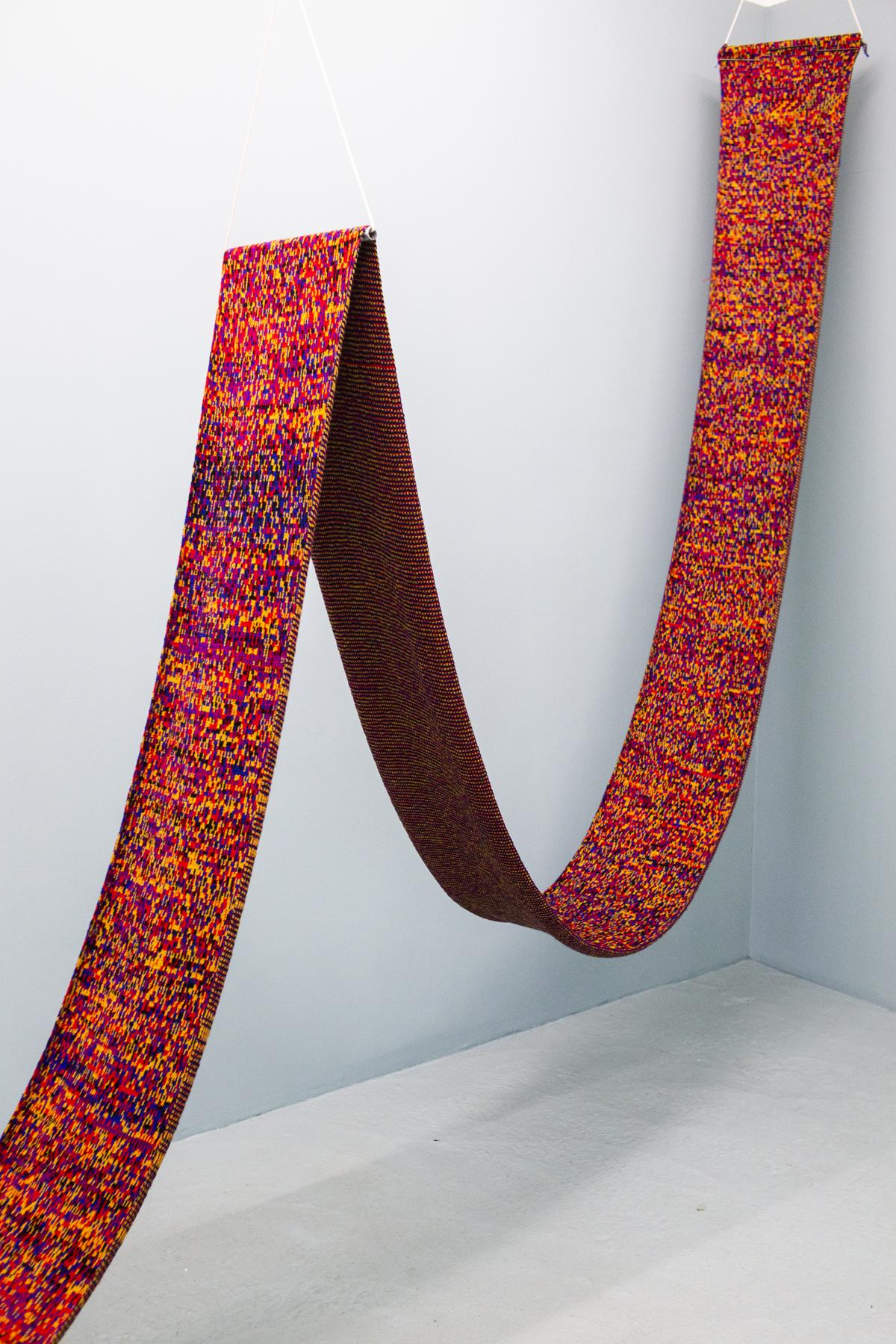
As We Wrap It Around Those Woollen Wings. It is a woollen textile piece knitted with a domestic
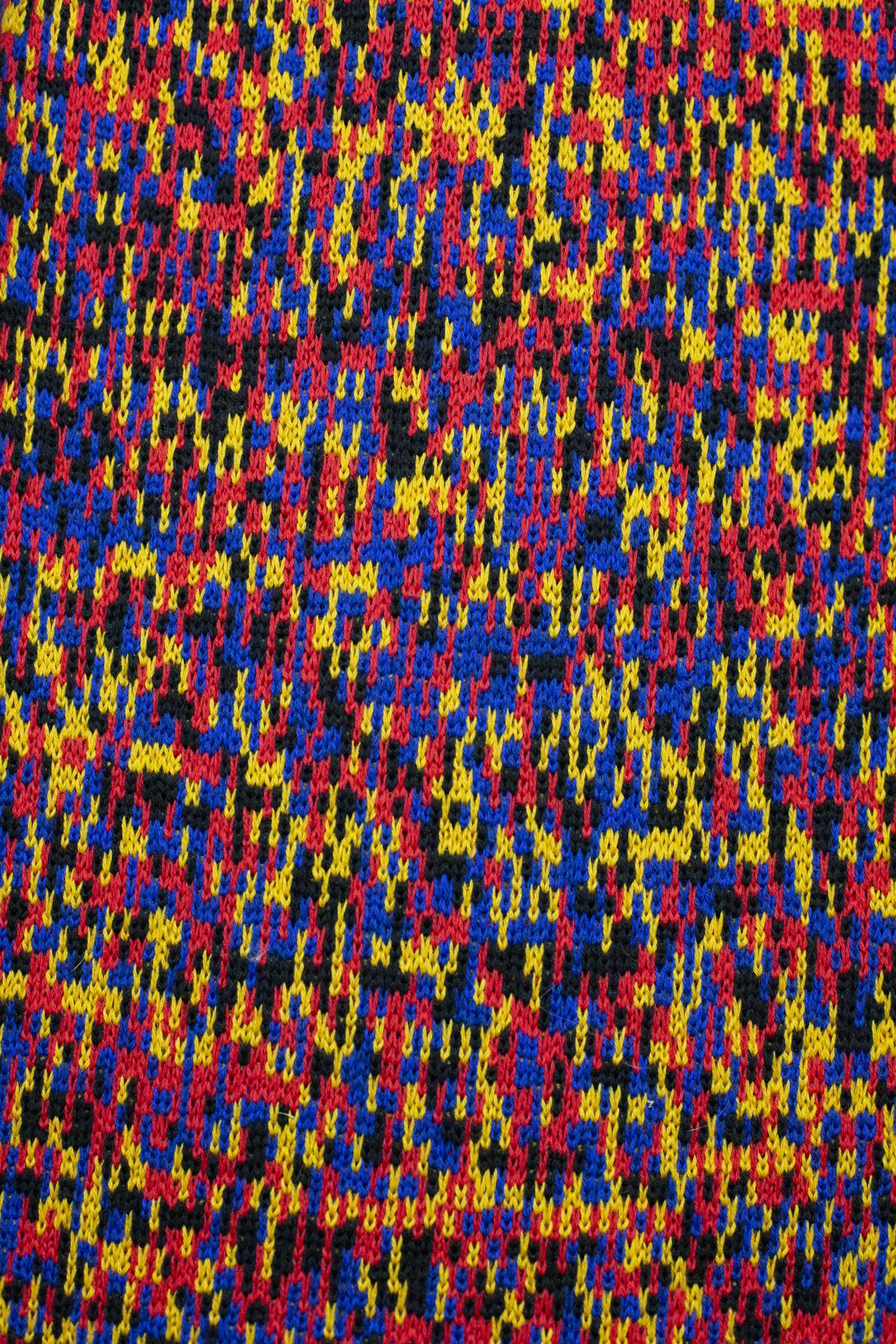
knitting machine using a four colour Jacquard technique. The pattern that I used to knit this
artwork comes from the DNA sequence of a sheep. Each of the four kinds of molecules present in a DNA
sequence became one out of four primary colours in the knitting pattern.
A recurring process in my work is the decomposition of complex ensembles into primordial
elements and the search for meaningful patterns among these. Searching for the simplicity that
builds complexity. This is what attracts me in working with DNA, especially in connection with
knitting and computer programming which are both techniques presenting this similarly poor set of
primordial building blocks, and yet, through the power of combination, they both offer endless
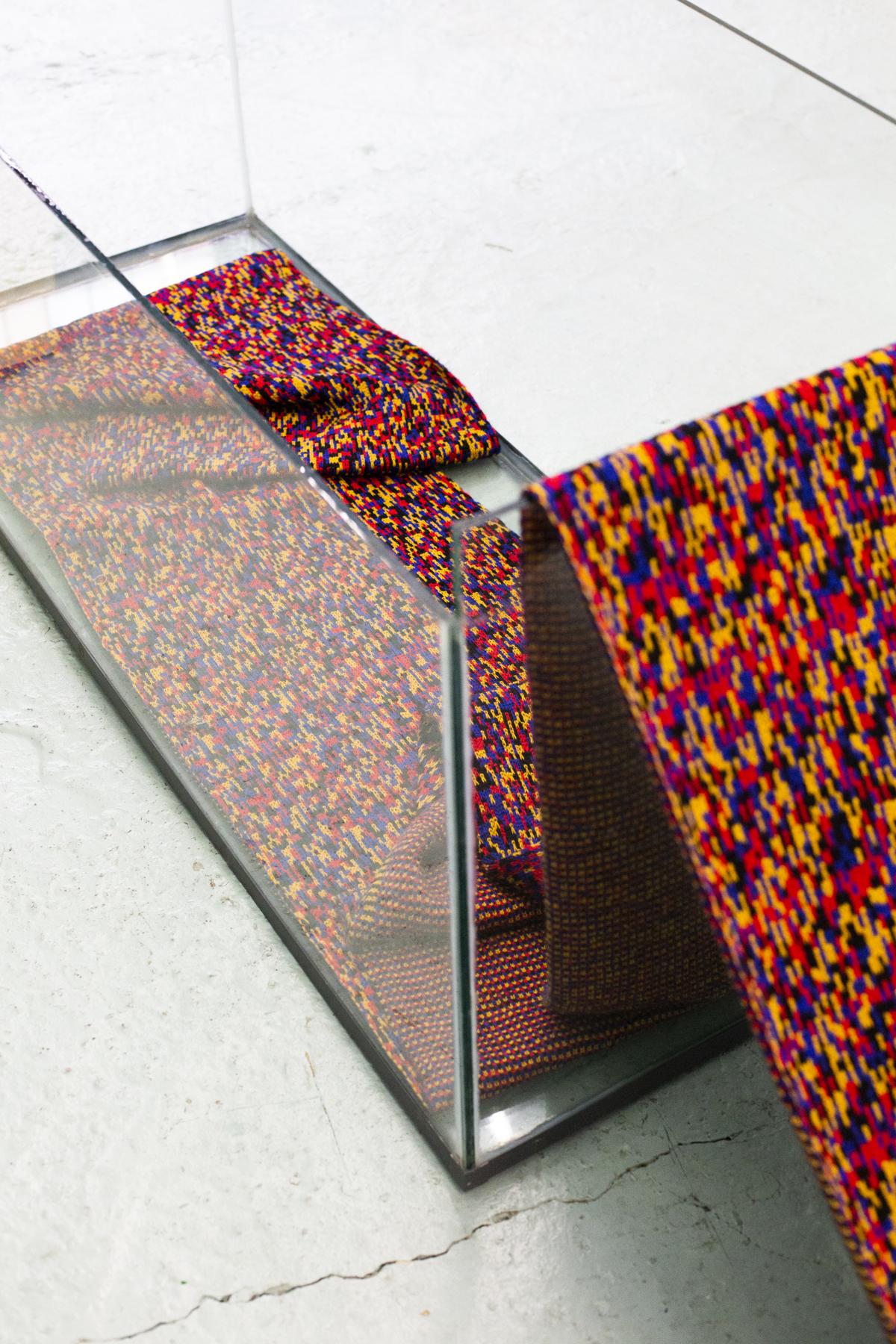
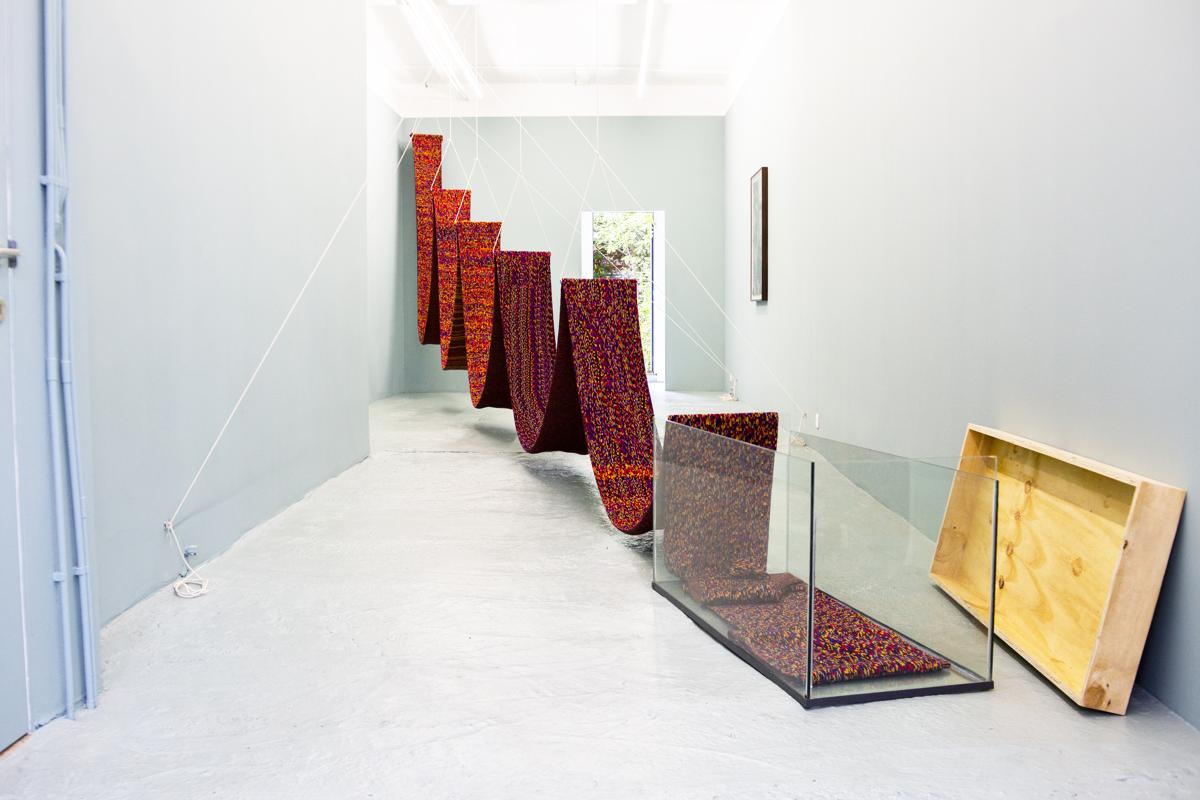
meandering building possibilities to their practitioner. After this show, the piece will be stored
in a terrarium where moths can feed on its high quality wool, thus altering the pattern, mutating
the sheep.
A knit can be seen as a three-dimensional object obtained from a one-dimensional one, the
thread. Out of this fragile element, a materially consistent structure takes shape. Its solidity is
the sum of the joint efforts of its weak components dividing charges betweenthem. The question is,
how will the contribution of these small agents, the moths, alter the balance that makes this
structure solid and resilient. Tunnelling through the folded layers of textile, what will be the
result of their combined actions among this constructed, ordinated and coherent world? Would we be
surprised if they were understanding genetics, and started building sheep to satisfy their own needs
for wool? Would their action reveal something else, and because their feeding on this piece is part
of the process, is it still destructive?